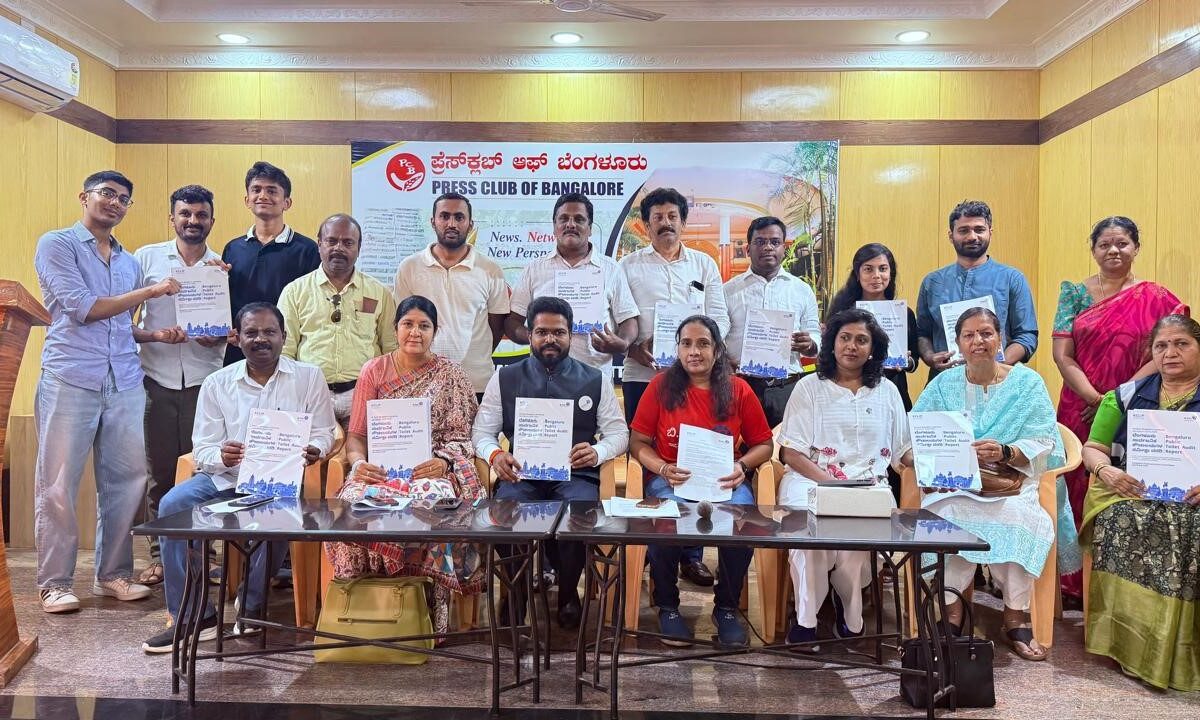
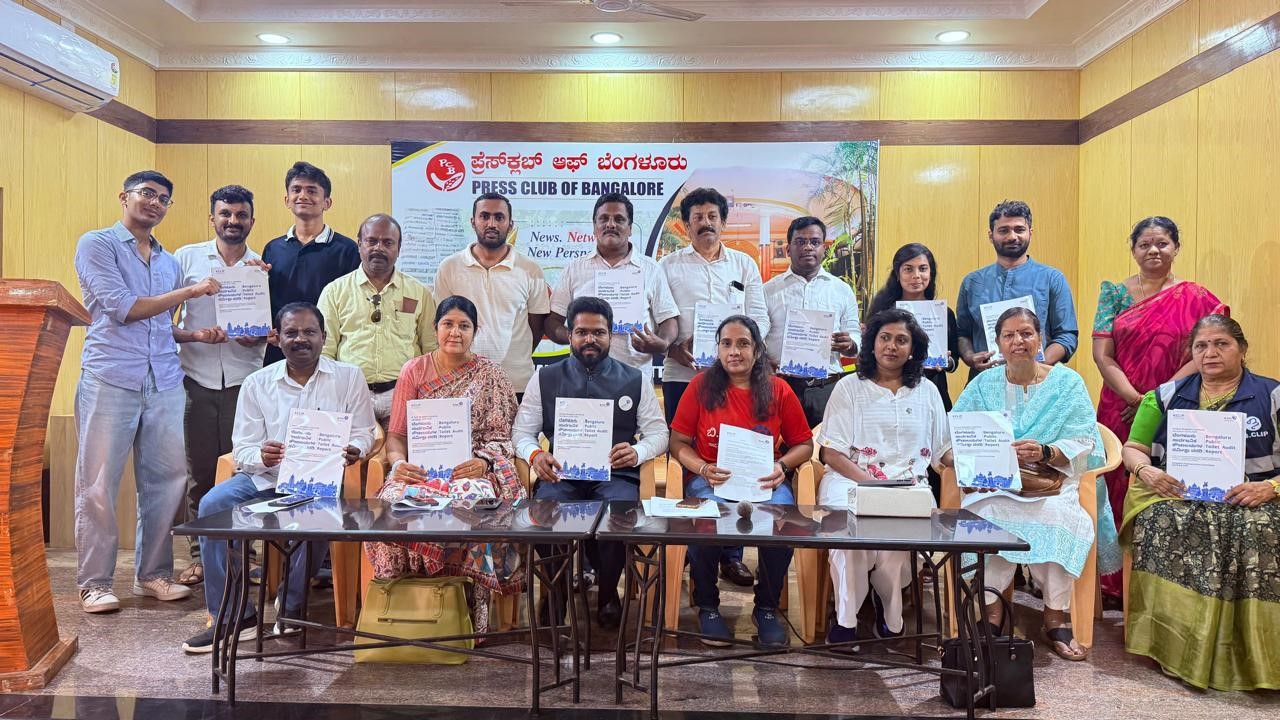
Bengaluru: The Bangalore Political Action Committee (B.PAC) recently released the Bengaluru Public Toilet Audit Report 2026, a first-of-its-kind citizen-led assessment of 142 public toilets across the Greater Bengaluru Authority (GBA) limits.
The audit, conducted during April and May 2026 by B.PAC’s B.CLIP Civic Leaders and student volunteers, provides a comprehensive assessment of the city’s public sanitation infrastructure, focusing on functionality, hygiene, accessibility, safety, and user experience.
The report highlights that while Bengaluru has grown into a global city with a population exceeding 1.4 crore, public sanitation infrastructure has failed to keep pace.
With only 800-900 public toilets across the city (479 officially listed under GBA), Bengaluru has approximately one public toilet for every 25,000-30,000 citizens, far below the city’s growing needs.
Key findings
The audit reveals serious concerns about the condition and accessibility of public toilets across Bengaluru:
- 142 public toilets audited across Central, North, South and West Bengaluru.
- 37 toilets (26 percent) are completely non-functional.
- Only 6 toilets (4.2 percent) were rated ‘Very Clean’.
- 58 percent of toilets have persistent foul odour.
- Only 56 percent of toilets are adequately lit, raising significant safety concerns, especially for women.
- Only 9 toilets have ramps, making nearly 94 percent inaccessible to persons with disabilities.
- Water is available in only around 40 percent of functional toilets.
- None of the toilets had soap dispensers or dustbins.
- Only 15 percent of caretakers are women.
- Contractor information and user charges are largely absent, limiting public accountability.
The report concludes that Bengaluru’s sanitation challenge is no longer merely about constructing toilets — it is about ensuring that existing facilities remain functional, safe, inclusive and well maintained.
Major recommendations
Based on the findings, B.PAC has recommended immediate and systemic reforms to improve public sanitation across Bengaluru, which are as follows:
- Launch a 30-day emergency repair campaign to restore all non-functional public toilets.
- Create a single Public Toilet Management Cell under the Greater Bengaluru Authority for unified planning, monitoring and maintenance.
- Shift from ‘Build-Only’ contracts to five-year Operate and Maintain (O&M) contracts, with strict performance monitoring and contract termination for poor maintenance.
- Ensure uninterrupted water supply, lighting, soap dispensers, dustbins and regular maintenance in every public toilet.
- Retrofit existing toilets to become fully accessible for persons with disabilities and adopt universal accessibility standards for all new facilities.
- Prioritise women-friendly and gender-inclusive public toilets, including She-Toilets and transgender-inclusive facilities.
- Strengthen community participation by involving RWAs, NGOs and citizen groups in monitoring public toilets.
- Display contractor and caretaker details prominently to improve transparency and accountability.
‘1,000 additional toilets needed’
In an official release, B.PAC B.CLIP Head Raghavendra Poojari H.S. urged the Government of Karnataka and the Greater Bengaluru Authority (GBA) to construct more than 1,000 modern, user-friendly, inclusive, and well-maintained public toilets across Bengaluru through GBA and the Public-Private Partnership (PPP) model.
He also appealed for priority to be given to locations such as bus stations, metro stations, markets, parks, tourist destinations, construction sites, and other high-footfall areas while planning new public toilets.