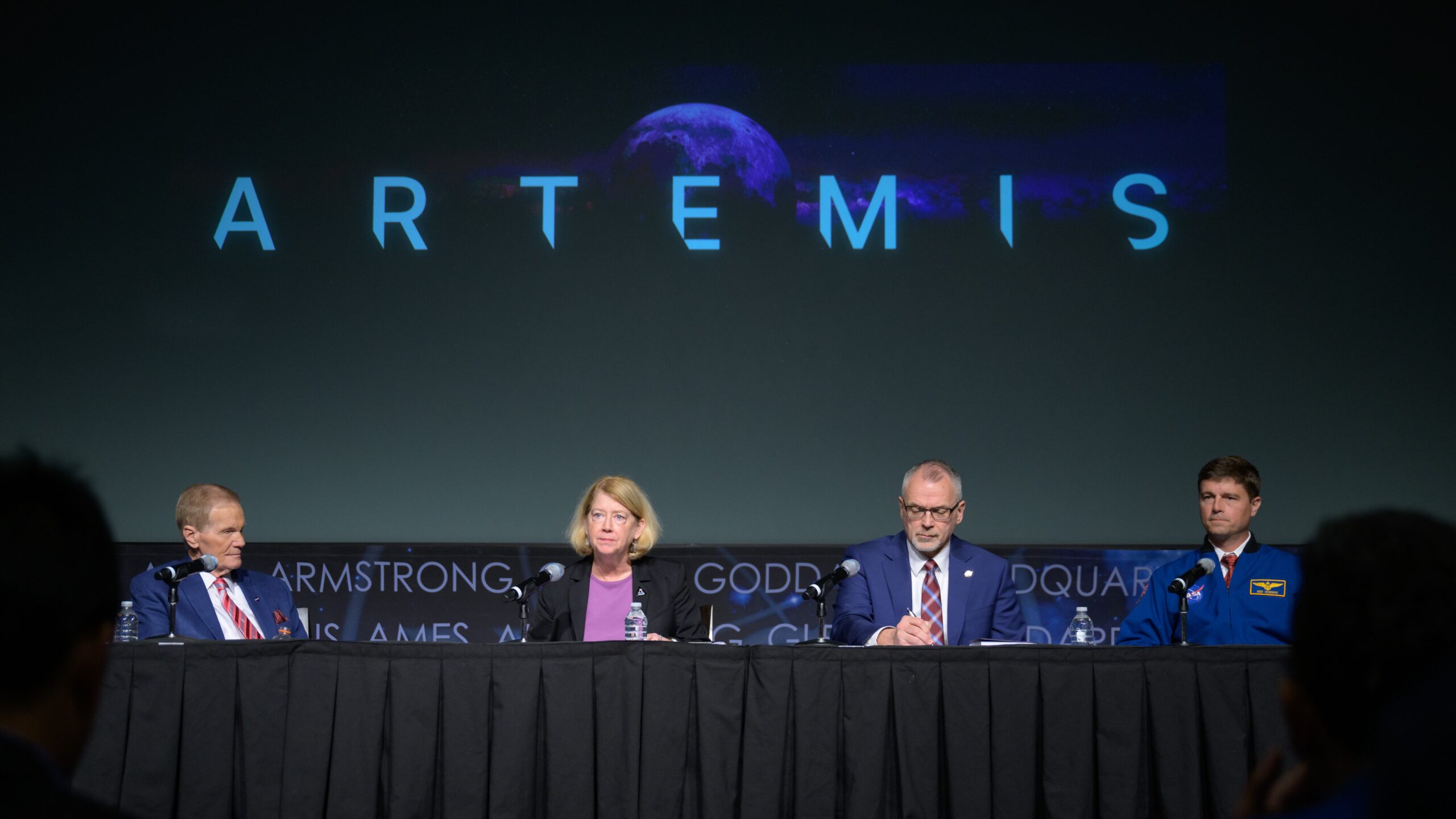
Munich: The successful return of NASA’s Artemis II mission after a historic ten-day journey marks a major milestone in human space exploration, reaffirming both technological resilience and engineering excellence.
The mission, which carried four astronauts deep into space and around the Moon, achieved the farthest distance from Earth ever reached by a crewed spacecraft — setting a new benchmark for future lunar and deep space missions.
At the heart of this achievement lies the robust performance of radiation-hardened semiconductor solutions developed by Infineon Technologies. Designed to withstand the harsh and unpredictable conditions of deep space, these “rad-hard” components proved critical in ensuring mission success.
Infineon’s advanced devices, supplied through its IR HiRel (high reliability) division, formed the electronic backbone of the Orion capsule.
From managing power supply systems and enabling precise control functions to ensuring seamless data communication, these semiconductors operated reliably in an environment marked by intense radiation, temperature extremes, and vast distances.
In an official press release, Infineon stated: “Artemis II is an extraordinary achievement for humanity and for everyone whose technology contributed to the mission. We are proud that our radiation-hardened semiconductor solutions performed reliably throughout and supported critical systems aboard Orion.”
The company further emphasised that its IR HiRel division’s components were specifically engineered for deep-space missions, ensuring uninterrupted performance in extreme radiation environments. “Reliable semiconductor technology is essential as missions travel farther and operate longer,” the company noted, adding that the success of Artemis II reinforces its commitment to supporting future lunar exploration and eventual missions to Mars.
The Artemis II mission represents a crucial step in NASA’s broader Artemis programme, aimed at establishing a sustainable human presence on the Moon. With Orion’s safe return, the mission not only demonstrated human endurance and technological capability but also underscored the indispensable role of advanced semiconductor solutions in pushing the boundaries of space exploration.