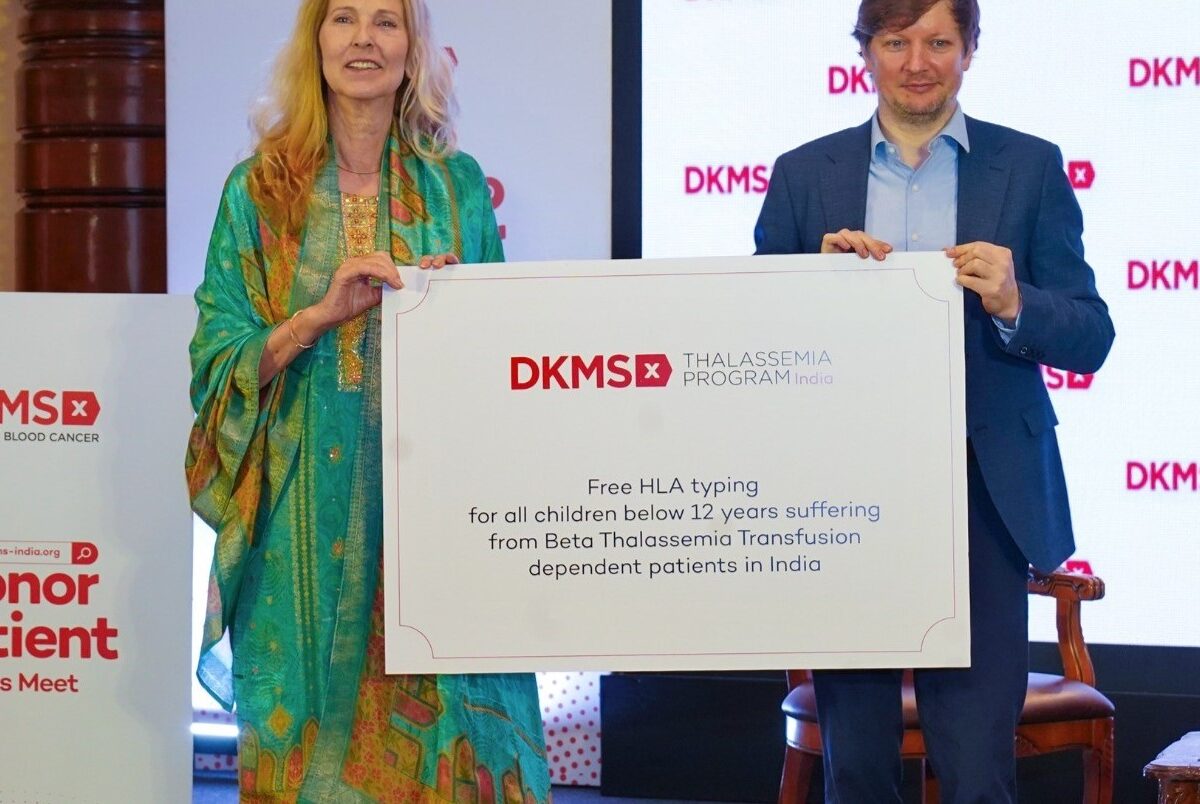
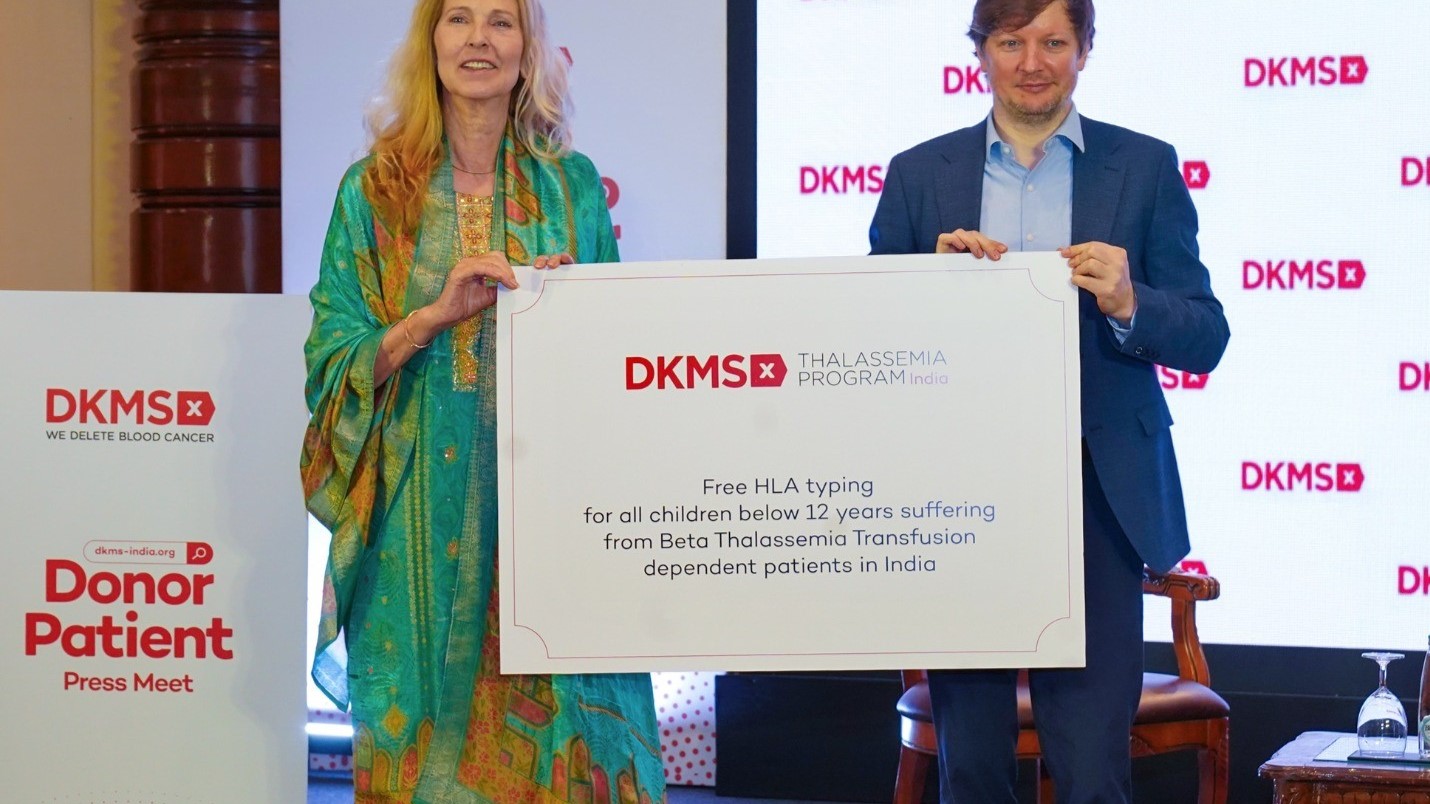
DKMS Foundation India has announced free HLA typing for all children below 12 years of age suffering from transfusion-dependent thalassaemia across India, in a major initiative aimed at improving access to life-saving stem cell transplantation for thousands of young patients.
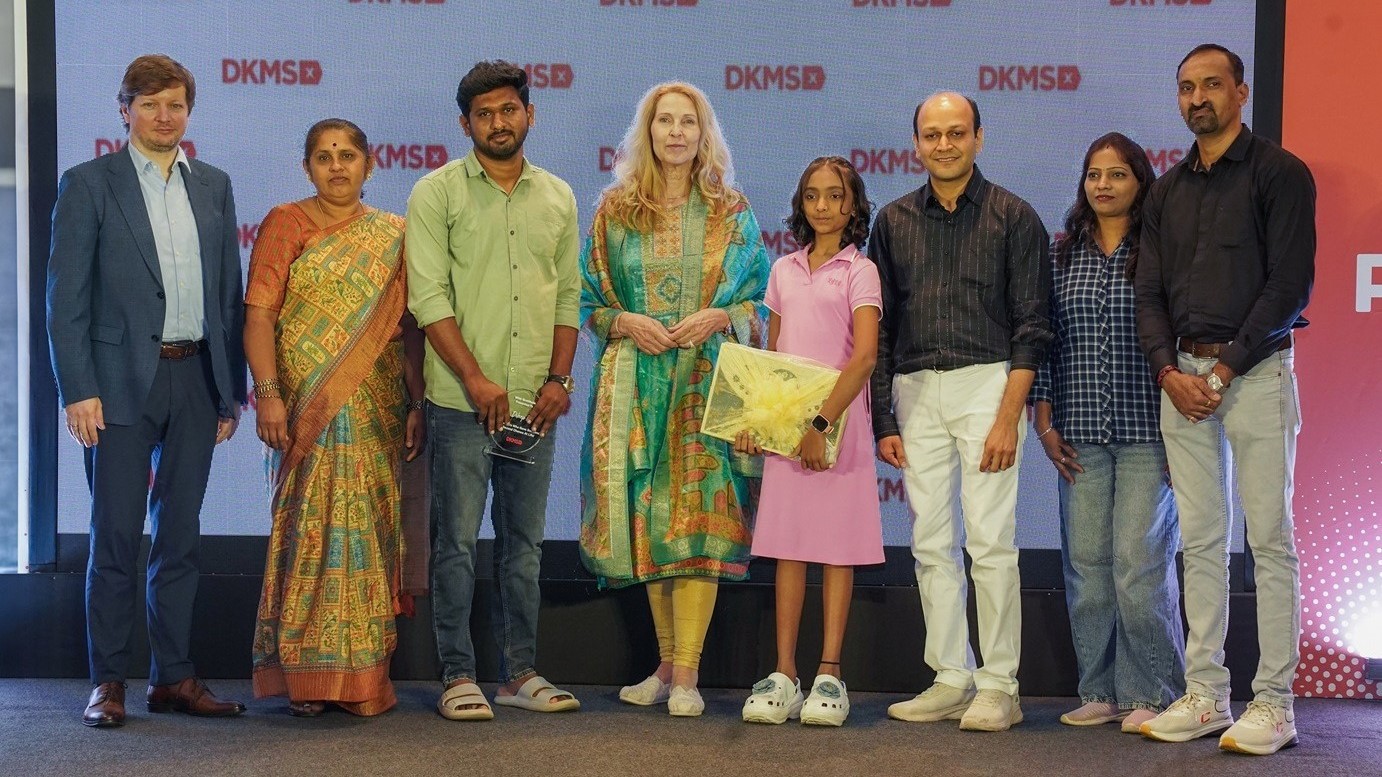
The announcement was made in Bengaluru ahead of World Thalassaemia Day during an emotional meeting between 12-year-old thalassaemia survivor Sameeksha and her stem cell donor Dilip K., a 27-year-old IT professional from Kolar, Karnataka, who helped save her life through stem cell donation.
What began as a simple stem cell donor registration drive at Dilip’s college eventually became a life-changing moment for Sameeksha and her family. The two met for the first time recently, after being connected only through a genetic match during her treatment journey.
“I didn’t think much of it when I registered,” Dilip said. “She is so full of life. Until now, she was just a match on paper. Meeting her today makes everything real.”
Diagnosed with beta thalassaemia major at a very young age, Sameeksha spent years dependent on regular blood transfusions while her family searched for a suitable stem cell donor. A transplant remained her only curative option.
“I feel happy now. I can play and go to school like other children,” Sameeksha said with a smile.
Her father recalled the long wait for hope. “We waited and hoped for years for a donor. There were moments when it felt uncertain, but we never gave up. Meeting him today is something we had only imagined,” he said.
Apart from facilitating the donor match, DKMS also extended financial support to the family under its Access to Transplant programme, which provides partial funding support to patients from economically weaker backgrounds who are unable to meet the high costs of stem cell transplantation.
Patrick Paul, Executive Chairman of DKMS Foundation India, said many families in India continue to face enormous financial challenges in accessing advanced treatment for life-threatening blood disorders.
“In India, patients from lower socioeconomic backgrounds face substantial challenges in accessing high-end treatment for life-threatening diseases like blood cancer and other blood disorders due to the enormous costs involved. The DKMS Access To Transplant programme aims to remove this barrier to life-saving treatment,” he said.
Highlighting the importance of improving affordability and access to stem cell transplantation, Dr. Elke Neujahr said the new initiative would ease the burden on families navigating the transplant journey.
“Through initiatives such as free HLA typing for children below 12 years suffering from transfusion-dependent beta thalassaemia in India, we aim to reduce barriers that often prevent patients from receiving curative treatment,” she said.
Under the programme, DKMS partners with NGOs and transplant centres across the country to conduct awareness and screening camps for thalassaemia patients and their families.
During these camps, patients, parents and siblings provide buccal swab samples for HLA typing to identify potential family donors. If no suitable donor is found within the family, DKMS supports patients with free unrelated donor searches through international registries.
Dr. Siddhesh Kalantri from BloodCare Haematology Clinic and Diagnostic Centre said Sameeksha’s journey highlights the importance of early diagnosis and timely intervention.
“When Sameeksha first came to us, she was just a few months old, yet full of spirit. Finding a matched unrelated donor for a child is never guaranteed, and when Dilip’s match came through, it was a moment of immense relief for our entire team,” he said.
India records more than 10,000 children born with thalassaemia every year. While regular blood transfusions remain essential for survival, stem cell transplantation is often the only curative treatment. However, finding a matched unrelated donor remains a major challenge, especially within Indian populations where donor availability is still limited.
Sameeksha’s story now stands as a powerful reminder of how awareness, timely medical intervention and a willing donor can together transform lives.
To register as a potential stem cell donor, individuals must be healthy adults between 18 and 55 years of age. Registration involves filling a consent form and providing a simple cheek swab sample for HLA testing, after which the donor is anonymously listed on the international stem cell donor registry.