

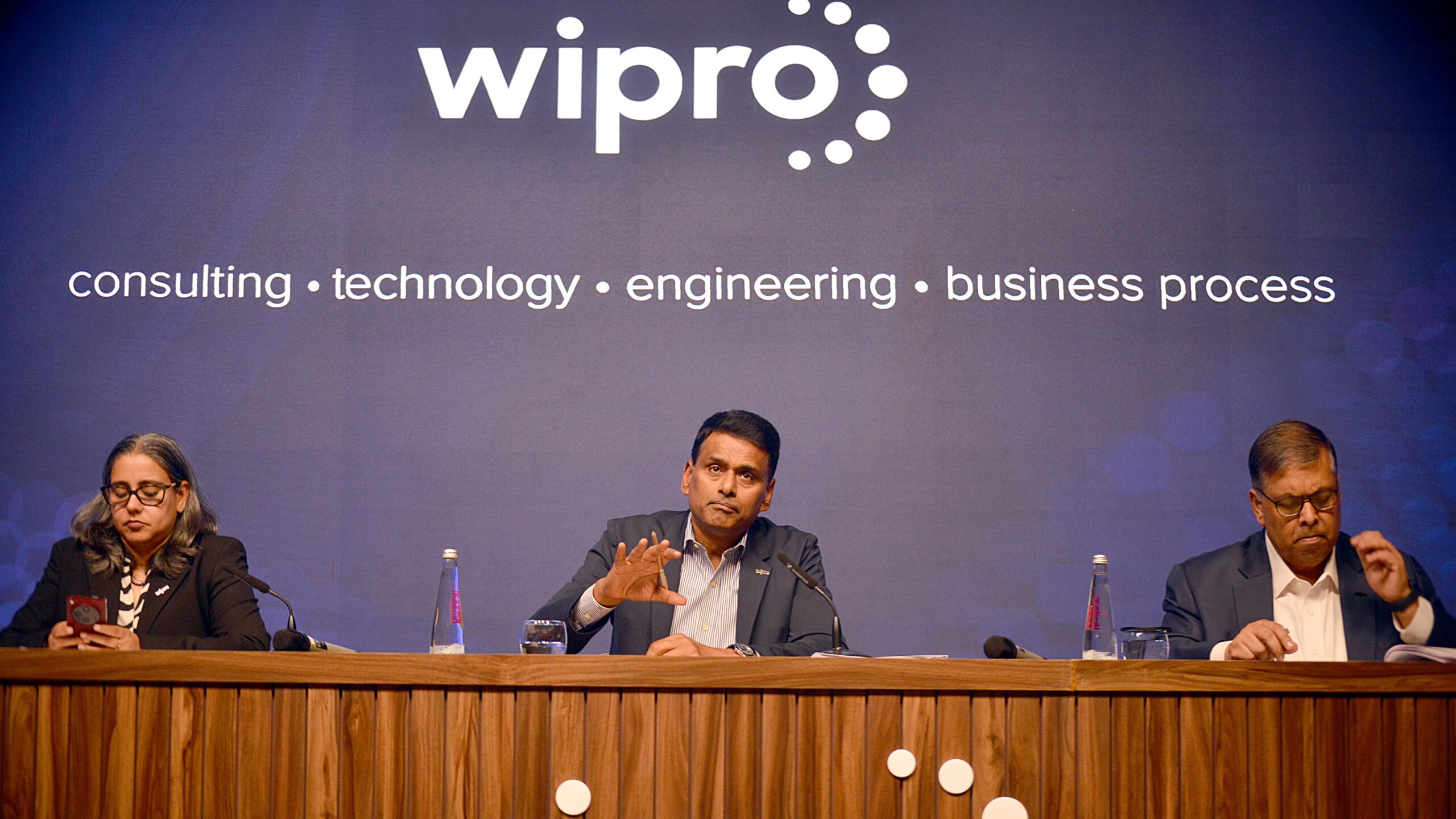
Bengaluru: Wipro Ltd’s December quarter performance reflected the complex cross-currents facing India’s IT services industry — steady deal momentum and cash generation on one side, and cost pressures from regulatory changes on the other.
The country’s fourth-largest IT firm reported a 7 per cent year-on-year decline in consolidated net profit to Rs 3,119 crore in Q3FY26, even as it announced a Rs 6 per share interim dividend, underlining confidence in its financial resilience.
The profit decline was largely attributed to one-time gratuity and labour code-related expenses, which weighed on reported earnings. On a sequential basis, net profit slipped 4 per cent.
However, adjusted for the impact of labour code changes, Wipro said net income would have stood at Rs 3,360 crore, marking a 3.6 per cent quarter-on-quarter increase and a marginal 0.3 per cent rise year-on-year — highlighting the underlying stability of the business.
Modest revenue growth amid cautious demand
Revenue from the IT services business came in at Rs 23,378 crore, registering a 3.3 per cent sequential growth, though marginally below Street expectations.
In constant currency terms, revenue grew 1.4 per cent quarter-on-quarter, but declined 1.2 per cent year-on-year, reflecting continued caution among global clients amid macroeconomic uncertainty.
For the March quarter, Wipro guided for IT services revenue in the range of $2.64 billion to $2.69 billion, implying 0–2 per cent sequential growth in constant currency, signalling a guarded near-term outlook.
Margins under pressure, execution remains firm
Operating performance was mixed. IT services EBIT stood at Rs 3,573.5 crore, with the reported EBIT margin slipping to 15.3 per cent, down from 16.7 per cent in the previous quarter. Sequentially, EBIT declined 5.5 per cent.
However, under IFRS accounting, Wipro reported an operating margin of 17.6 per cent, reflecting a 90 basis points sequential expansion and a marginal year-on-year improvement.
The company attributed this to execution discipline and cost optimisation initiatives, despite the near-term margin headwinds from regulatory changes.
Dividend, cash flow highlight financial strength
In a strong signal to shareholders, Wipro’s board declared an interim dividend of Rs 6 per share (face value Rs 2), payable on or before February 14, to shareholders on record as of January 27. The payout takes Wipro’s total shareholder distribution for the year to about $1.3 billion, reinforcing its commitment to capital returns.
Operating cash flow remained robust at Rs 4,259 crore, equivalent to 135.4 per cent of net income, underscoring the company’s strong cash conversion and balance-sheet strength.
Deal wins, workforce trends
Deal activity stayed healthy, with total deal bookings of $3.3 billion, including large deals worth $0.9 billion, offering revenue visibility in a challenging demand environment.
Wipro added 6,529 employees during the quarter, largely driven by fresher onboarding, taking total headcount to 2,42,021. Attrition moderated slightly to 14.2 per cent, compared with 14.9 per cent in the previous quarter. Utilisation, excluding trainees, declined to 83.1 per cent from 86.4 per cent sequentially.
Management reiterated that while campus hiring in FY26 is expected to be broadly similar to FY25, final decisions will depend on how the business environment evolves.
Labour Code impact: A one-time drag
The quarter was significantly impacted by gratuity expenses of Rs 302.8 crore following the implementation of the new labour codes. Wipro said the changes resulted in an increase of Rs 291.5 crore in the provision for defined benefit obligations, recognised as an employee benefit expense in Q3. The company added that it continues to monitor further clarifications from Central and State governments and will adjust accounting treatment as required.
The big picture
While headline numbers point to pressure on profits, Wipro’s Q3FY26 results reveal a company navigating regulatory shocks without compromising on deal momentum, cash generation, or shareholder returns.
As global demand remains cautious, Wipro’s focus on execution, cost discipline, and capital efficiency will be closely watched in the quarters ahead.