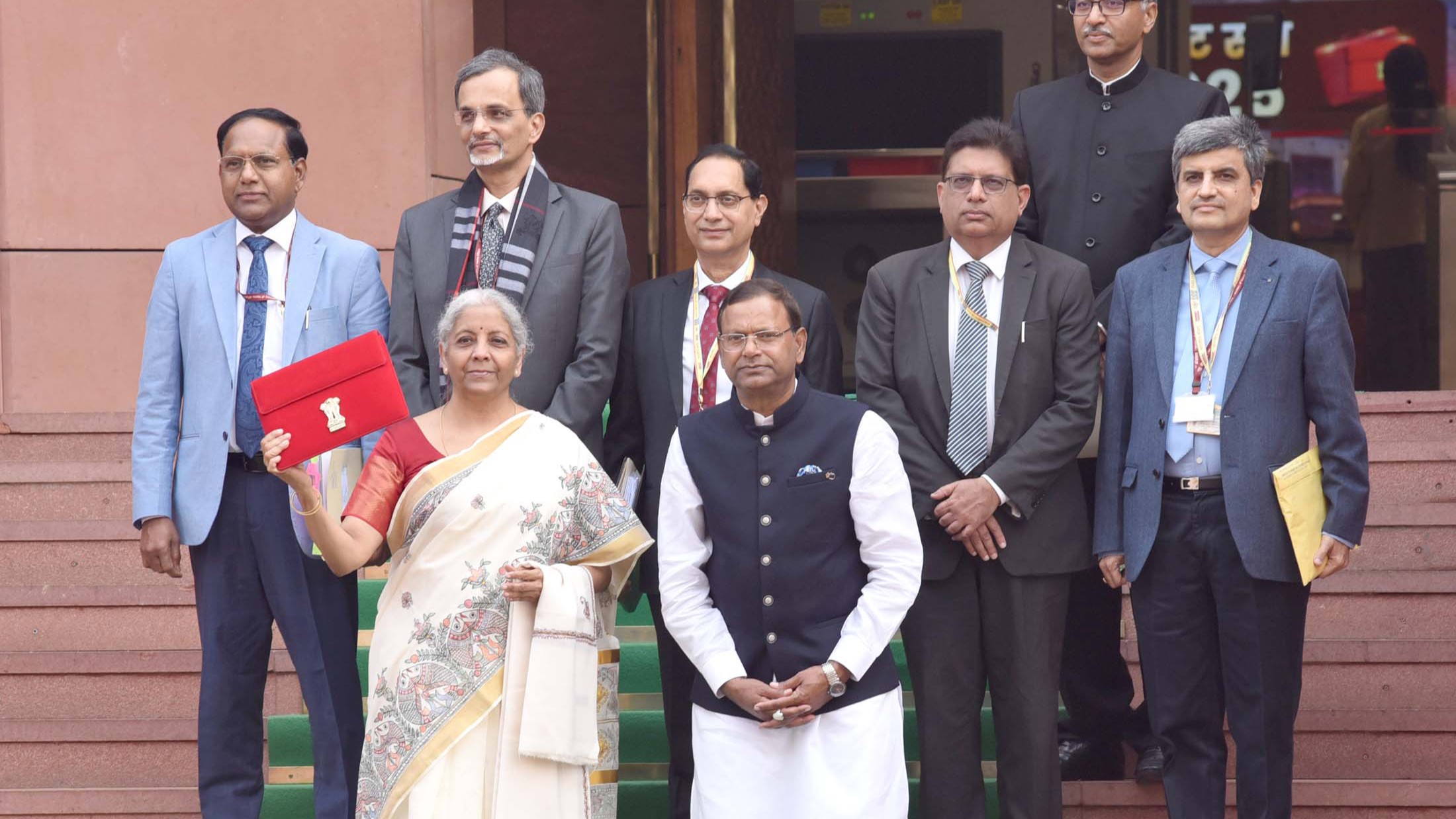
As the Union Budget 2026 approaches, the stakes are unusually high, as fiscal consolidation remains a priority for the government. However, numbers alone will not capture the full story and challenges ahead.
For policymakers, it is important to anticipate and be prepared to manage risks that could derail the balancing act — sustaining growth, controlling inflation and fiscal discipline.
In 2026, certain fiscal risks should be watched out for, which are: global volatility, monsoon and fiscal balancing. Let’s examine them one by one.
- Global Volatility
Today, no economy is isolated from global events, and India is no exception. At present, the world is witnessing volatility in governance, oil, war, and inflation, which affects every economy’s fiscal health.
When there is a sudden spike in oil prices, the import bill increases and widens a nation’s Current Account Deficit (CAD). This impacts subsidies, which increases expenditure and reduces excise duties that impact government revenues.
Interest rate decisions in advanced economies have a ripple effect through capital flows, borrowing costs and exchange rates. Geopolitical tensions often add uncertainty and unexpected risks for policymakers. To absorb these shocks, policymakers should build buffers — such as diversified energy sourcing, stronger fiscal reserves, and balanced debt management.
- Monsoon Dependence
Even today, Agriculture preponderantly continues to anchor livelihoods and dictate food inflation. Indian agriculture still depends on the monsoon, with a weak or erratic monsoon almost certain to produce food inflation. This forces policymakers to increase subsidies, release buffer stocks, and import essential goods at high costs, consequently resulting in a fiscal burden.
Rural demand hinges on agricultural incomes — the sector being one of the most crucial, apart from FMCG and housing. Therefore, monsoon risks should be anticipated by policymakers, and investment in irrigation, crop diversification and climate-resilient farming practices are futuristic moves.
Fiscal prudence cannot ignore the truth that in India, it is the monsoon that controls food prices and rural consumption.
However, a strong monsoon can turn the tables completely, by fuelling rural demand, producing a multiplier effect across various sectors and redefining the growth path.
- Fiscal Balancing
The third and most important risk is Fiscal Balancing. All eyes will be on policymakers as they juggle increasing debt-servicing costs, subsidies, and revenue generation during Budget 2026.
Rising debt‑servicing costs may crowd out productive expenditure (especially capital expenditure), higher subsidies will add to the fiscal burden (though unavoidable), and revenue generation remains the crucial math for balancing the budget.
Strong fiscal balancing will attract investors and reinforce confidence in an economy that can sustain growth while keeping debt and subsidies within limits.
The challenge for policymakers is to balance all three, and that delicate act will define the economy’s growth path for 2026.