
Bengaluru: A fully Indigenous Automatic Reeling Machine (IARM) developed by a Bengaluru firm was unveiled recently.
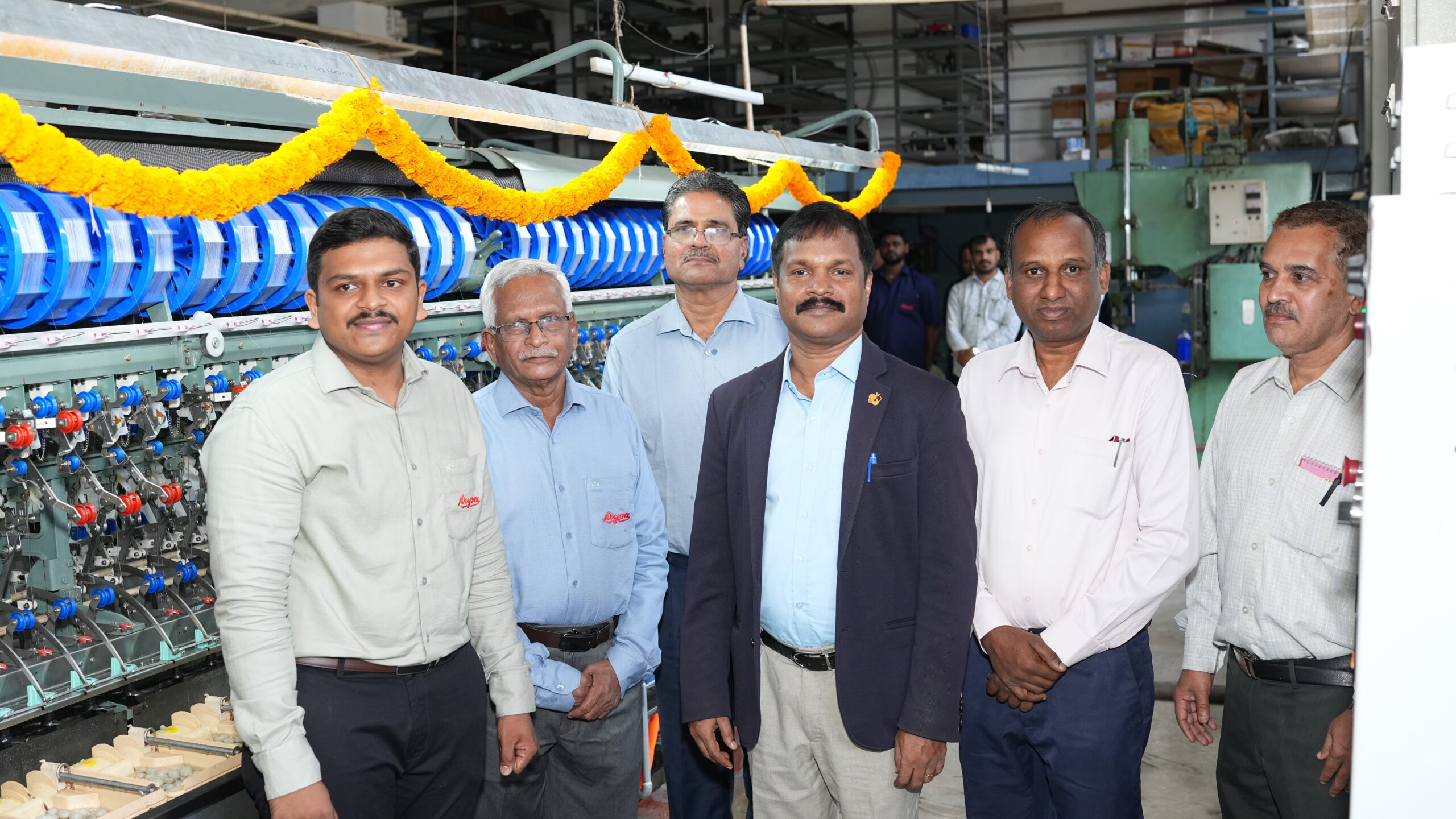
Aryan Engineering based in Kanakapura, Karnataka, showcased the technology with P. Sivakumar, Member-Secretary, Central Silk Board (CSB), and Dr. S. Periasamy, Director, CSB-Central Silk Technological Research Institute (CSTRI), inaugurating the demonstration programme and witnessing how the machine works, its design and the firm’s in-house manufacturing infrastructure, live, according to a recent PIB report.
Aryan Engineering, a small-scale industry with a legacy of over 70 years, has been serving the silk sector since 1955 and is a well-known pan-India supplier of Multi-end Reeling Machines (MRM).
The firm has supplied over 400 MRMs across India and more than 500 cottage-based reeling units, significantly supporting decentralized silk reeling and rural livelihoods.
The unit currently provides employment to 16 skilled workers, reflecting its role in local industrial development.
The development of the indigenous IARM was initiated in 2022, and after more than three years of sustained design, engineering, and testing efforts, it has reached a functional demonstration stage.
The technology draws inspiration from Japanese reeling machine systems, adapted and indigenized to suit Indian conditions and cost structures.
Certain advanced features, such as the denier indicator are under further refinement and may take additional time for full integration.
The project has been guided and technically supported by CSB and CSTRI, particularly in areas of quality assurance, performance benchmarking and standardization, ensuring that the machine meets industry and export-oriented requirements.
The firm is also in the process of planning ZED (Zero Effect, Zero Defect) certification, aligning with national quality and sustainability standards.
A capital investment subsidy under relevant government schemes is also under process, which will further strengthen indigenous manufacturing.
Appreciating the achievement, Sivakumar highlighted that the development of the IARM was a strong embodiment of Atmanirbhar Bharat, reducing dependence on imported reeling machinery and promoting home-grown engineering solutions.
He, particularly, lauded the efforts of the young generation of engineers and technologists involved in the project and encouraged them to continue innovation and continuous improvement to achieve higher benchmarks in silk reeling technology.
The event was attended by reelers from the Kanakapura region, along with serving and retired scientists of CSTRI, reflecting strong industry-research collaboration.
The successful development of the indigenous IARM marks an important milestone in India’s journey towards self-reliance, quality manufacturing, and sustainable growth in the silk reeling sector.
What is silk reeling?
Silk reeling is the process by which a number of cocoon baves are reeled together to produce a single thread. This is achieved by unwinding filaments collectively from a group of cooked cocoons at one end in a warm water bath and winding the resultant thread onto a fast moving reel.
Raw silk reeling may be classified by direct reeling method on a standard sized reel, indirect method of reeling on small reels, and the transfer of reeled silk from small reels onto standard sized reels on a re-reeling machine.
The last technique is primarily applied in modern silk reeling processes.