
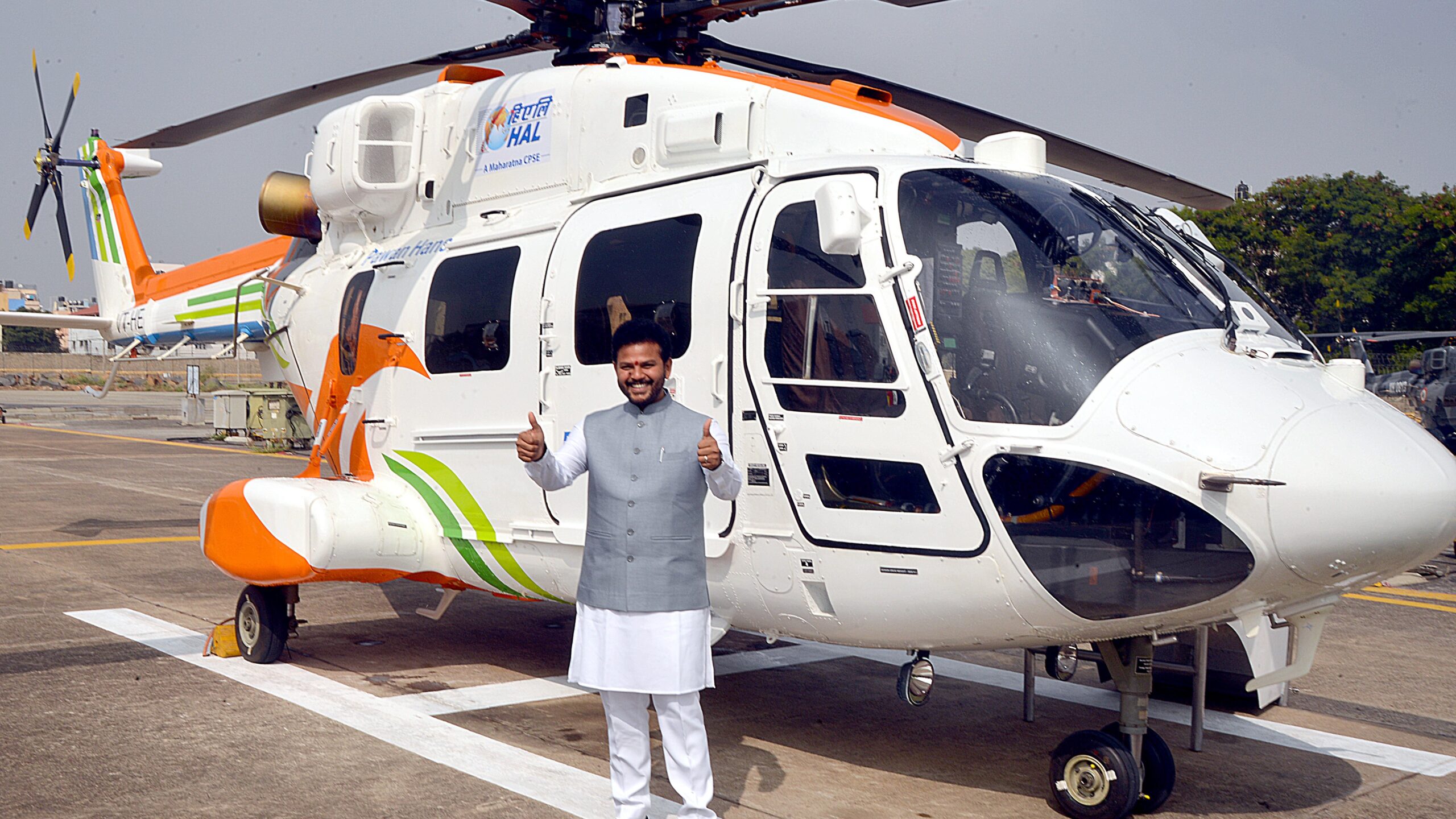
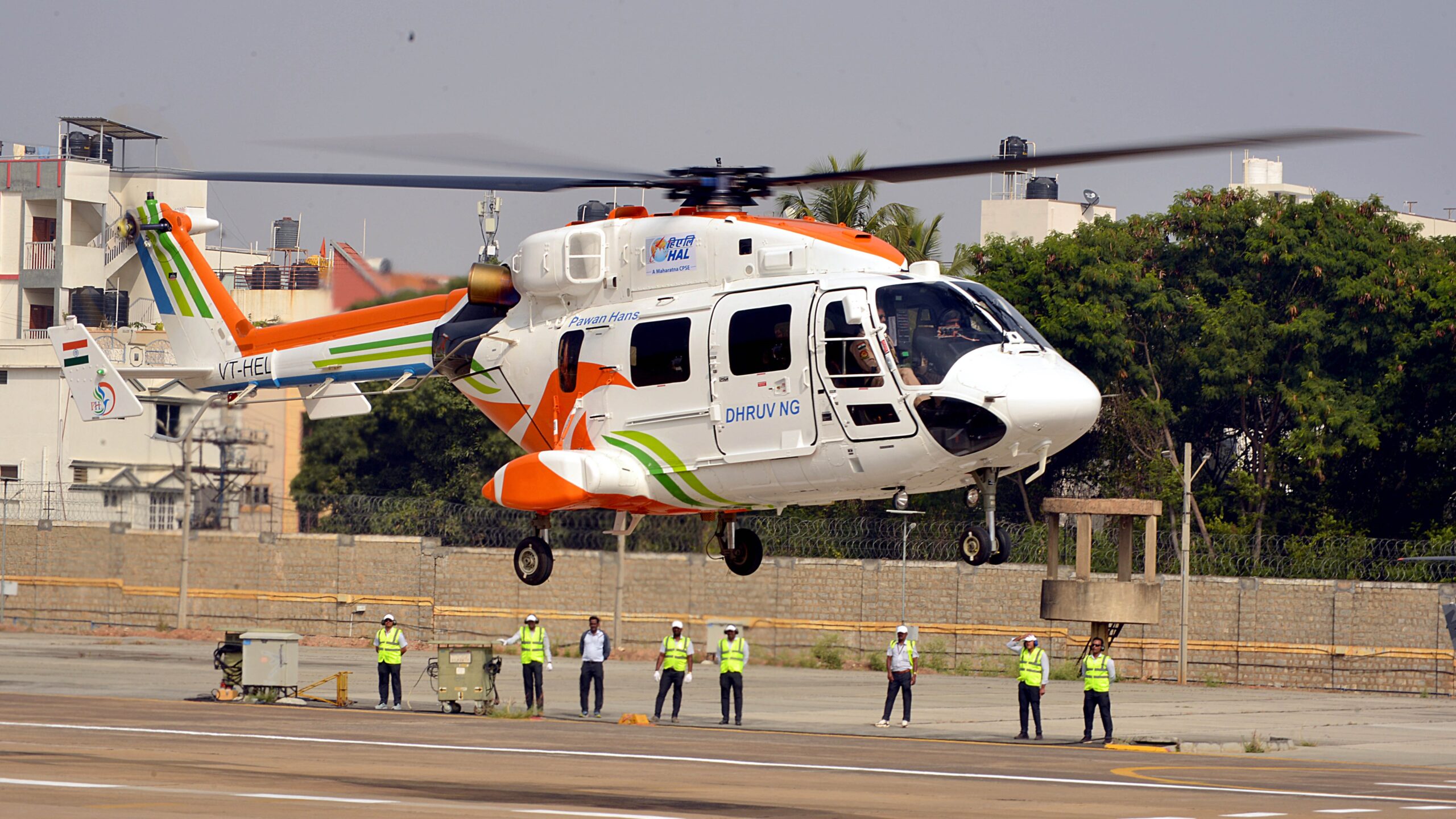
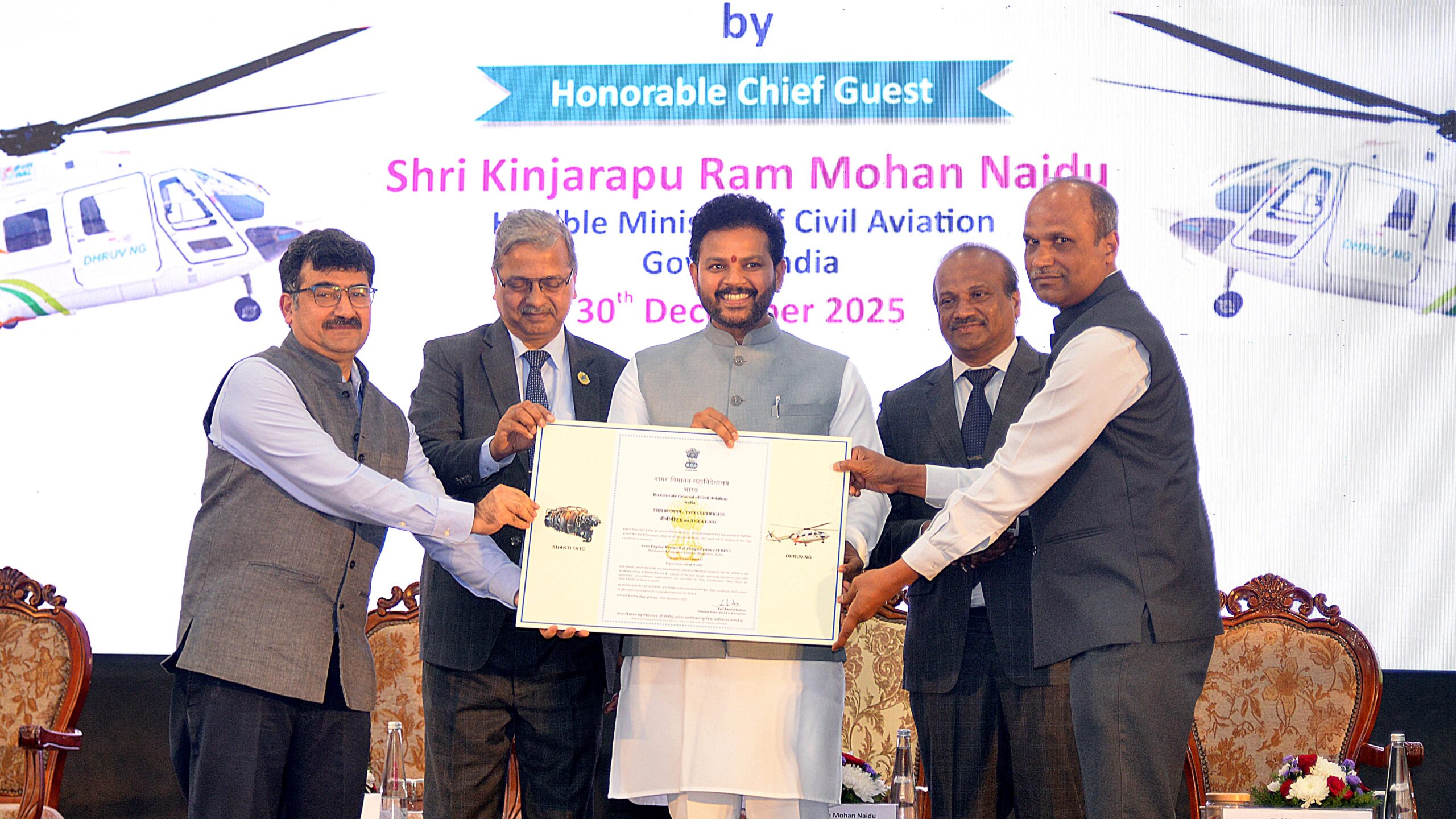
Bengaluru: Hindustan Aeronautics Limited (HAL) on Tuesday successfully completed the maiden flight of its next-generation Advanced Light Helicopter, the Dhruv New Generation (Dhruv-NG), at its Helicopter Division in Bengaluru, marking a significant milestone for India’s civil aviation and indigenous aerospace capabilities.
The inaugural flight underlines India’s growing ambition to compete globally in the arena of advanced, multi-role helicopters, a space long dominated by costly imports.
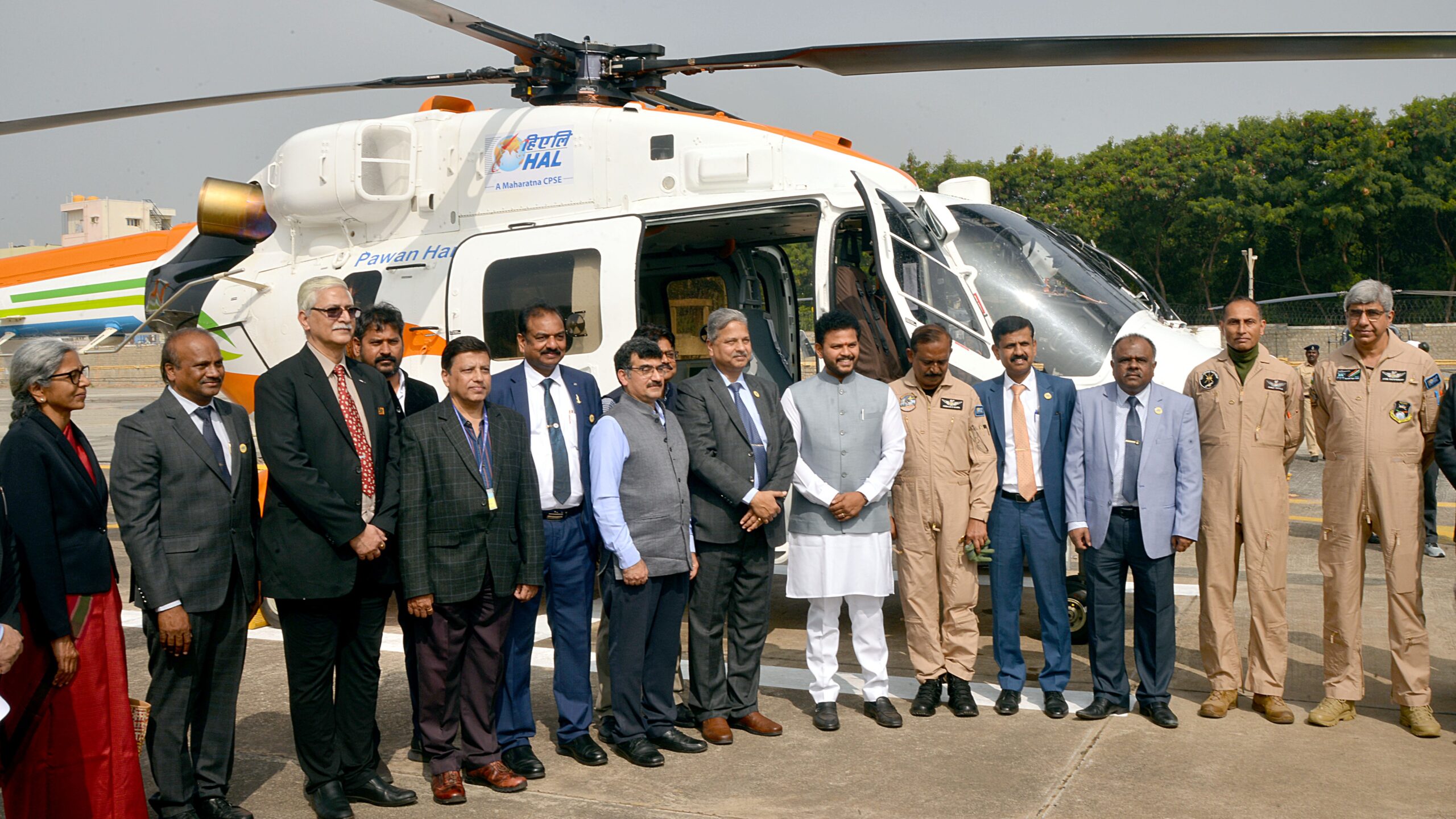
Ahead of the flight, Colonel Ranjit Chitale briefed Union Civil Aviation Minister K. N. Mohan Naidu on the helicopter’s enhanced capabilities, design philosophy, and operational versatility.
At the heart of the Dhruv-NG are twin Shakti 1H1C engines equipped with dual-channel FADEC, enabling CAT A and CAT B operations and delivering high levels of power, reliability, and safety for both day and night missions.
Designed as a robust 5.5-tonne class helicopter, the platform is engineered to perform across India’s extreme conditions — from the deserts of Rajasthan and the monsoon-heavy Western Ghats to the thin air of high-altitude regions like Ladakh.
One of the standout features of the Dhruv-NG is its all-glass, TSO-qualified cockpit, integrated with advanced avionics that allow safe operations in fog, low visibility, and rapidly changing weather.
The helicopter is equipped with a 3D synthetic vision system that offers pilots a comprehensive spatial view of terrain, obstacles, and the horizon, even in complete darkness or adverse weather, significantly reducing the risk of spatial disorientation.
In terms of performance, the Dhruv-NG boasts a maximum speed of 285 kmph, a range of 630 km, and a service ceiling of 6,000 metres.
It can carry a useful load of 2,333 kg, including underslung cargo of up to 1,500 kg, and sustain missions for up to 3 hours and 40 minutes.
The spacious 7.33 cubic metre cabin allows flexible configurations, accommodating up to 14 passengers or enabling roles such as high-density troop transport, VIP travel, air ambulance and casualty evacuation, offshore operations, and even mobile ICU setups.
Safety has been central to the helicopter’s design. The Dhruv-NG incorporates emergency flotation gear, life jackets, egress lighting, system redundancies, and maintenance optimisation derived from over two decades of operational data from earlier Dhruv variants.
According to HAL, these enhancements have resulted in a one-third reduction in downtime, even under intensive operational conditions. A nationwide maintenance and support ecosystem is also being planned to support civil and utility operators.
HAL officials said the maiden flight conclusively demonstrated the helicopter’s performance and flexibility.
“The Dhruv-NG is ready for both military and civil roles. Today’s successful flight proves that indigenous technology can meet a wide spectrum of demanding missions,” a spokesperson said.
With India’s civil helicopter market expanding rapidly — driven by regional connectivity, emergency medical services, disaster response, offshore energy operations, and tourism — the Dhruv-NG arrives as a cost-effective, high-performance alternative to imported platforms.
HAL’s ‘One-Stop Solution’ model, covering manufacturing, maintenance, upgrades, and logistics within the country, further strengthens the case for domestic adoption.
Integrated support models such as Power-by-the-Hour and Performance-Based Logistics aim to maximise aircraft availability and minimise lifecycle costs.
With certification, extensive trials, and operational deployment planned on a compact timeline in coordination with the Aviation Directorate and the DGCA, the Dhruv-NG stands as a flying symbol of India’s push for self-reliance, safety, and technological excellence — and a strong statement of intent in the global civil aviation marketplace.