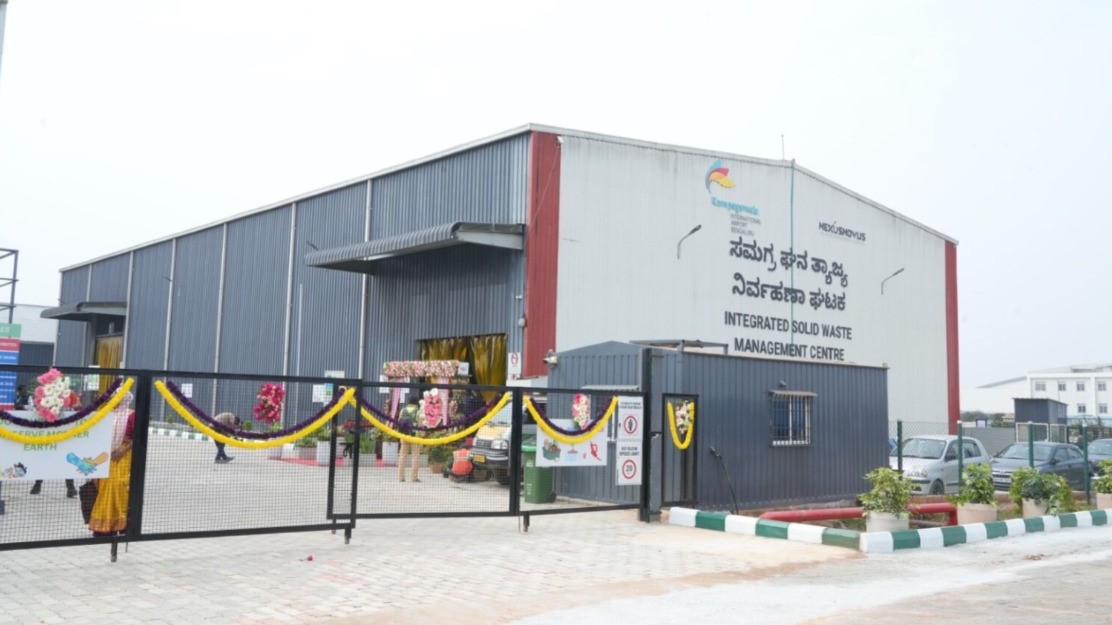
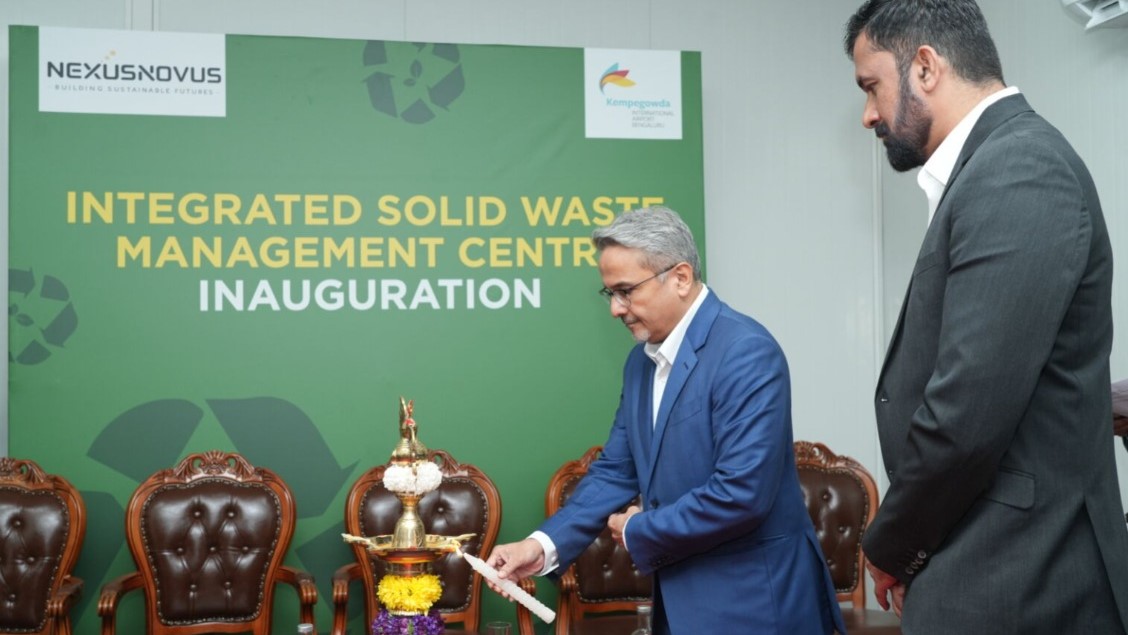
Bengaluru: The Kempegowda International Airport Bengaluru recently inaugurated its in-house Integrated Solid Waste Management Centre (ISWMC), which strengthens scientific waste processing and circular economy practices across the airport ecosystem, to align with India’s sustainability and climate ambitions.
As one of India’s busiest airports, KIA generates approximately 24–26 tonnes per day of solid waste across terminals, airside operations, commercial outlets, and allied facilities currently.
The ISWMC enables scientific, end-to-end waste processing at source, enhancing operational control, reducing reliance on external handlers, minimising transportation-related environmental risks, and contributing to lower emissions, improved compliance, and greater operational resilience.
With the facility in place, the airport expects to reduce landfill disposal to 2–3 percent of total waste, enabling 97–98 percent of waste to be recycled or recovered through in-house processes and authorised partners.
Designed with a total processing capacity of 77 tonnes per day (TPD), the ISWMC is designed to manage both organic and inorganic waste streams. Organic waste, up to 50 TPD, is treated through bio-methanation technology, converting biodegradable waste into compressed biogas (CBG) for use in airport kitchens, along with liquid organic manure and compost to support landscaping requirements.
The remaining 27 TPD of inorganic waste is processed through advanced segregation systems, with recyclables directed to authorised recycling partners and recoverable material utilised for co-processing in the cement industry.
Speaking on the inauguration, Hari Marar, MD, Bangalore International Airport Limited (BIAL), said: “As a rapidly growing airport, we are conscious of the responsibility that comes with managing our environmental footprint. Sustainability is about creating long-term value for people, the community, and the environment. The ISWMC strengthens our ability to manage waste at source, transform it into a resource, and embed circular economy principles into everyday operations. This initiative reinforces our commitment to resilient infrastructure and responsible growth as we scale for the future.”
The airport is the first in Asia to achieve Level 5 Accreditation under ACI’s Airport Carbon Accreditation programme, reflecting a 95.6 percent reduction in Scope 1 and Scope 2 emissions and the achievement of net-zero status well ahead of its 2030 target.
KIA has also received multiple ACI Green Airports Recognition awards for its work in renewable energy, plastics circularity, and climate-resilient infrastructure.