Bengaluru: Minor Irrigation, Science, and Technology Minister N.S. Boseraju recently directed officials to finalize the exact number of water bodies in the state and take immediate necessary steps to classify them according to their respective departments.
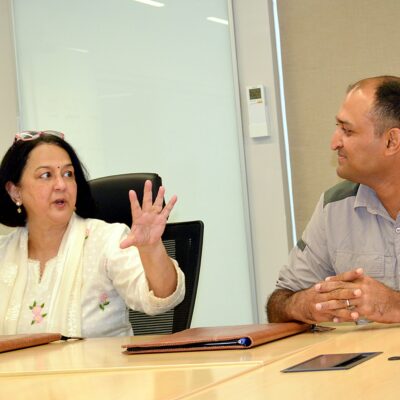
The Minister issued these instructions during a meeting held at his office in Vikas Soudha a few days ago.
The meeting was attended by Minor Irrigation Department Secretary B.K. Pavithra, along with senior officials from the Survey Settlement and Land Records (SSLR), Karnataka State Remote Sensing Applications Centre (KSRAC), Karnataka Council for Science and Technology (KCST), and the Karnataka Tank Conservation and Development Authority (KTCDA).
Resolving ambiguity
The Minister noted that there was significant confusion regarding the status and ownership of approximately 41,849 water bodies across the state.
“There is a lack of clarity regarding which department owns specific tanks/water bodies. This ambiguity is hindering their proper maintenance and protection. To resolve this, we must first consolidate accurate data regarding the exact number of water bodies. Inter-departmental coordination is essential for this task, and officials must act immediately,” the Minister stated.
Key resolutions
Finalize (‘Freeze’) the Total Number of Water Bodies: To eliminate confusion, a scientific survey must be conducted to determine and ‘freeze’ (finalize) the total count of tanks in the state. The Minister emphasized that this step was crucial for the conservation of water bodies and to prevent encroachment.
Classification by Ownership: Once finalized, the water bodies must be clearly segregated and classified (bifurcated) based on which department’s jurisdiction they fall under (e.g., Minor Irrigation, Rural Development/Panchayat Raj, or others). This will help in fixing accountability for their maintenance.
Report on Low Water Levels (<30%): The Minister directed officials to urgently submit a report identifying which tanks in the state currently have less than 30 percent water storage. This data will be instrumental in formulating future development plans and rejuvenation projects.
Boseraju further directed KSRAC and KCST to effectively utilize advance technology and satellite data to ensure the accuracy of this process.



 TBM Newsdesk