India has built one of the world’s largest welfare systems, covering a majority of its population through programmes focused on food security, health, education, nutrition, employment, and social protection. Welfare measures such as the Public Distribution System (PDS), MGNREGA, and social security transfers have played a critical role in protecting vulnerable households, especially during the Covid-19 pandemic which hit the world post 2020.
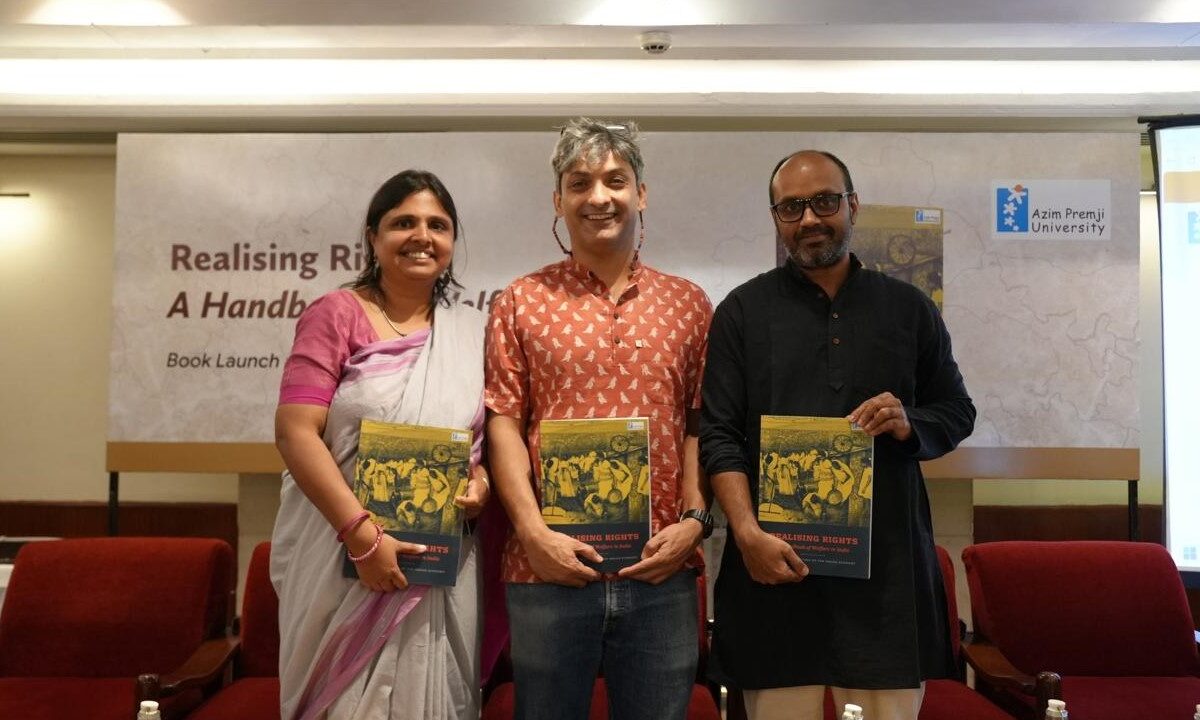
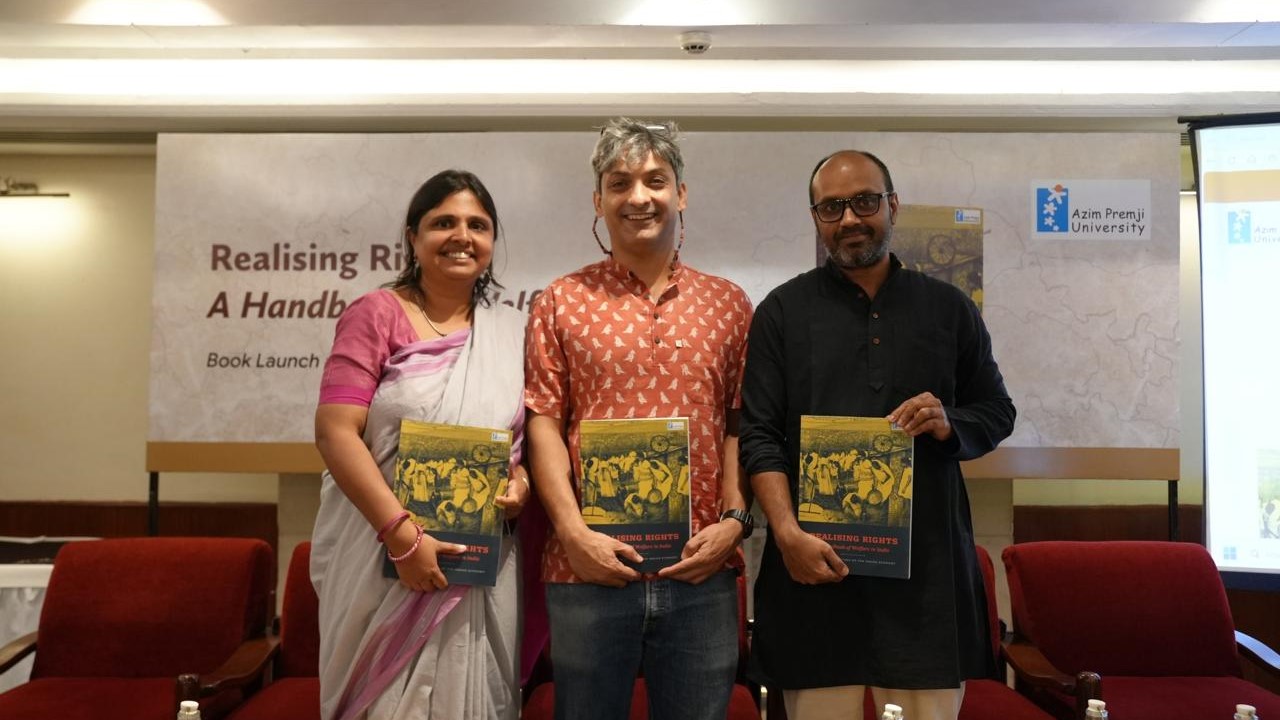
To examine the strengths, gaps, and future of India’s welfare architecture, Azim Premji University has released Realising Rights: A Handbook of Welfare in India. Developed by the Centre for the Study of the Indian Economy (CSIE), the handbook brings together 27 authors across 18 chapters and offers a rights-based analysis of India’s welfare policies and public systems.
Key messages from the handbook include:
- State governments account for nearly 90 percent of India’s social sector spending, while the Union government’s share has declined from 23.6 percent in 2008-09 to 8.5 percent in 2024-25.
- Governments collectively spend about 7 percent of GDP and 21 percent of total public expenditure on welfare sectors and schemes covered in the volume.
- Public spending on education remains around 4 percent of GDP and health below 2 percent of GDP, both below policy targets.
- Rights-based interventions have significantly expanded welfare coverage:
- Anganwadi centres increased from 6 lakh to 14 lakh following Supreme Court orders.
- The National Food Security Act expanded subsidised foodgrain coverage from 36.3 crore to over 81 crore people.
- MGNREGA generated 200-300 crore person-days of employment annually, with women accounting for over 55 percent of employment generated.
The rapid expansion of cash transfer programmes is reshaping welfare delivery, while increasing digitisation is creating new challenges around exclusion and accountability.
Key programmes continue to face gaps in coverage, funding, and implementation, including maternity benefits, nutrition programmes, pensions, and healthcare.
Indu Prasad, President, Azim Premji University, is quoted in an official release as saying: “India’s Constitution embodies a commitment to dignity, opportunity, and justice for every citizen. We hope this handbook contributes to informed public dialogue and strengthens collective efforts to build a more equitable and inclusive India, advancing the aspiration of a Viksit Bharat that leaves no one behind.”
Dipa Sinha, Centre for the Study of the Indian Economy, Azim Premji University, is quote in the release as saying: “This handbook provides a comprehensive view of India’s welfare landscape through an analysis of major rights-based interventions of the Union government. We hope it serves as a valuable resource for academics, journalists, practitioners, and students, while helping translate research into action.”
The aim of the handbook, as per the release, was to bring together evidence from across sectors, to facilitate informed debates on welfare policy, governance, and social justice.
The handbook is available online at: https://azimpremjiuniversity.edu.in/publications/2026/book/realising-rights