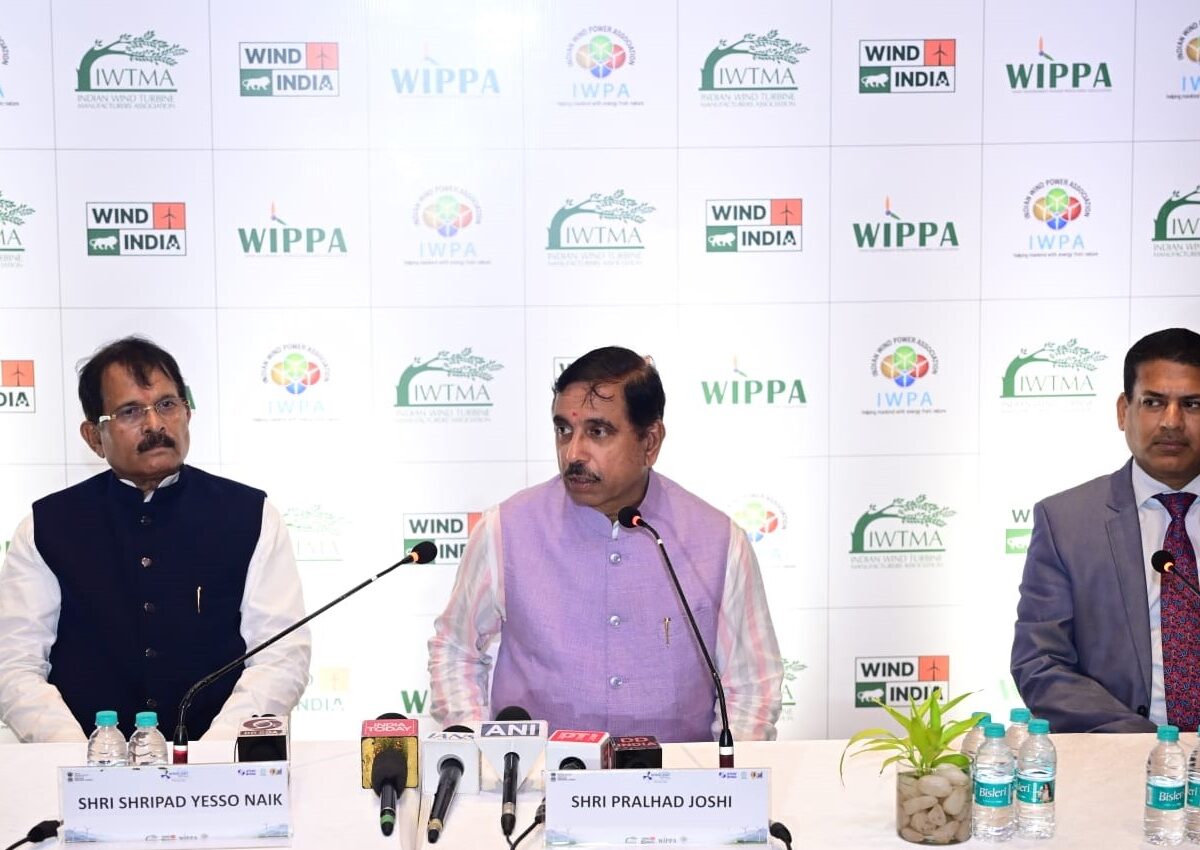
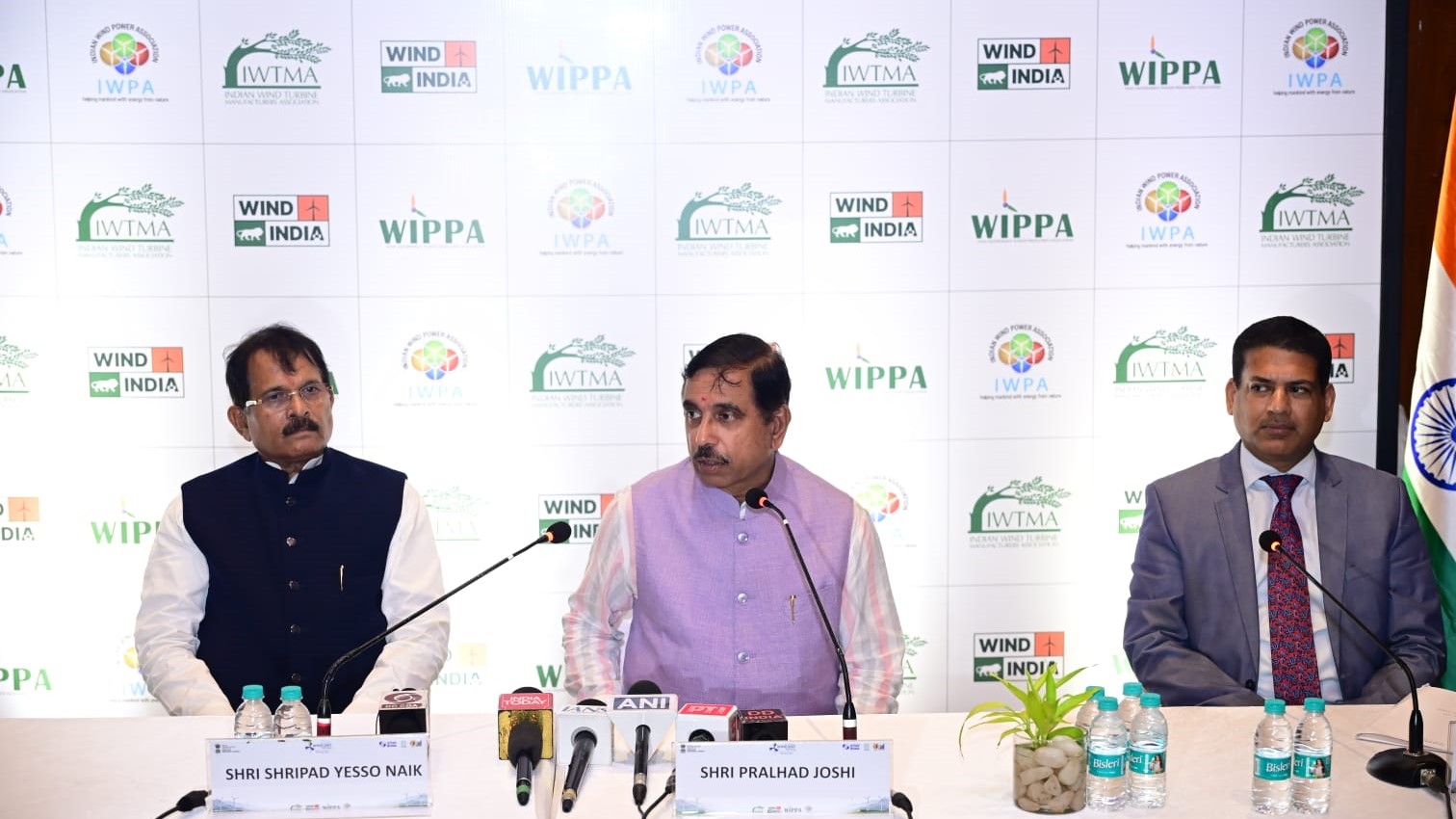
Union Minister of New and Renewable Energy, Pralhad Joshi, recently said that India’s clean energy transition was driving the nation’s journey towards Viksit Bharat and that the country’s wind energy sector was entering a new era of global leadership powered by innovation, exports and energy security, according to a PIB release.
Addressing the media during the Global Wind Day Conference 2026 in Goa, the Minister highlighted the progress achieved by India’s renewable energy sector over the past 12 years.
He stated that Goa hosting the national Global Wind Day celebrations reflected the State’s growing role in India’s renewable energy transition and appreciated the active participation of the Government of Goa in advancing the country’s green growth agenda.
Joshi said India’s wind sector had witnessed unprecedented growth, with annual wind turbine manufacturing capacity increasing from 10 GW in 2014 to 24 GW today, reflecting the success of the Aatmanirbhar Bharat initiative.
He said India recorded its highest-ever annual wind capacity addition in 2025-26, crossing 6 GW in a single year, representing nearly a 46 per cent increase over the previous year and reaffirming India’s position among the world’s fastest-growing wind energy markets.
Emphasizing the importance of wind energy in the evolving energy landscape, the Minister said wind energy was no longer merely a source of power generation but was increasingly becoming a reliability resource.
The future of renewable energy, he noted, was in integrated systems combining wind, solar energy, energy storage and advanced forecasting technologies to deliver affordable and reliable 24×7 clean power.
Joshi pointed out that a wind-rich power system could potentially save the country nearly ₹2.3 lakh crore, demonstrating the economic benefits of wind energy beyond electricity generation.
He further highlighted that India’s wind energy potential remained enormous and largely untapped.
At a hub height of 150 metres, the country’s estimated wind energy potential stands at nearly 1,164 GW, making it one of the largest renewable energy opportunities in the world.
The Minister said India was targeting 100 GW of installed wind energy capacity by 2030 and 156 GW by 2036, making wind power a critical pillar of the country’s clean energy transition.
Highlighting key achievements in the power sector, he said India’s total installed power generation capacity had increased from 442.85 GW in March 2024 to 538 GW, adding nearly 100 GW in just over two years.
During the same period, non-fossil fuel-based installed power capacity rose from about 198 GW to more than 292 GW, registering an addition of approximately 93 GW.
He said that over the past decade, India had transformed from being one of the “Fragile Five” economies to the world’s fastest-growing major economy and from a power-deficit nation facing frequent outages to a power-surplus nation.
He also highlighted that India achieved 50 per cent non-fossil fuel installed electricity capacity in 2025, meeting its Nationally Determined Contribution (NDC) target five years ahead of schedule.
Joshi observed that India had moved from “discussing possibilities” to delivering “measurable outcomes” and was today emerging as a global leader in clean energy and sustainable development.