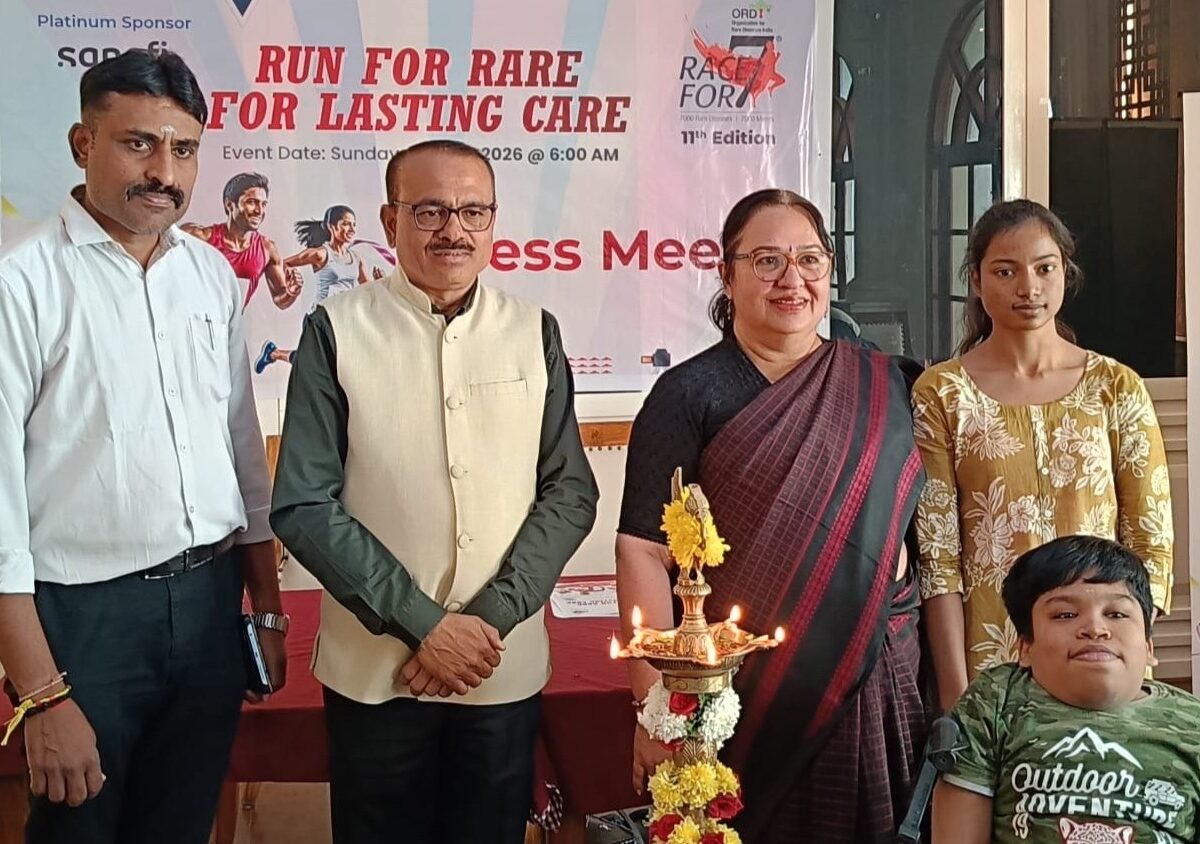
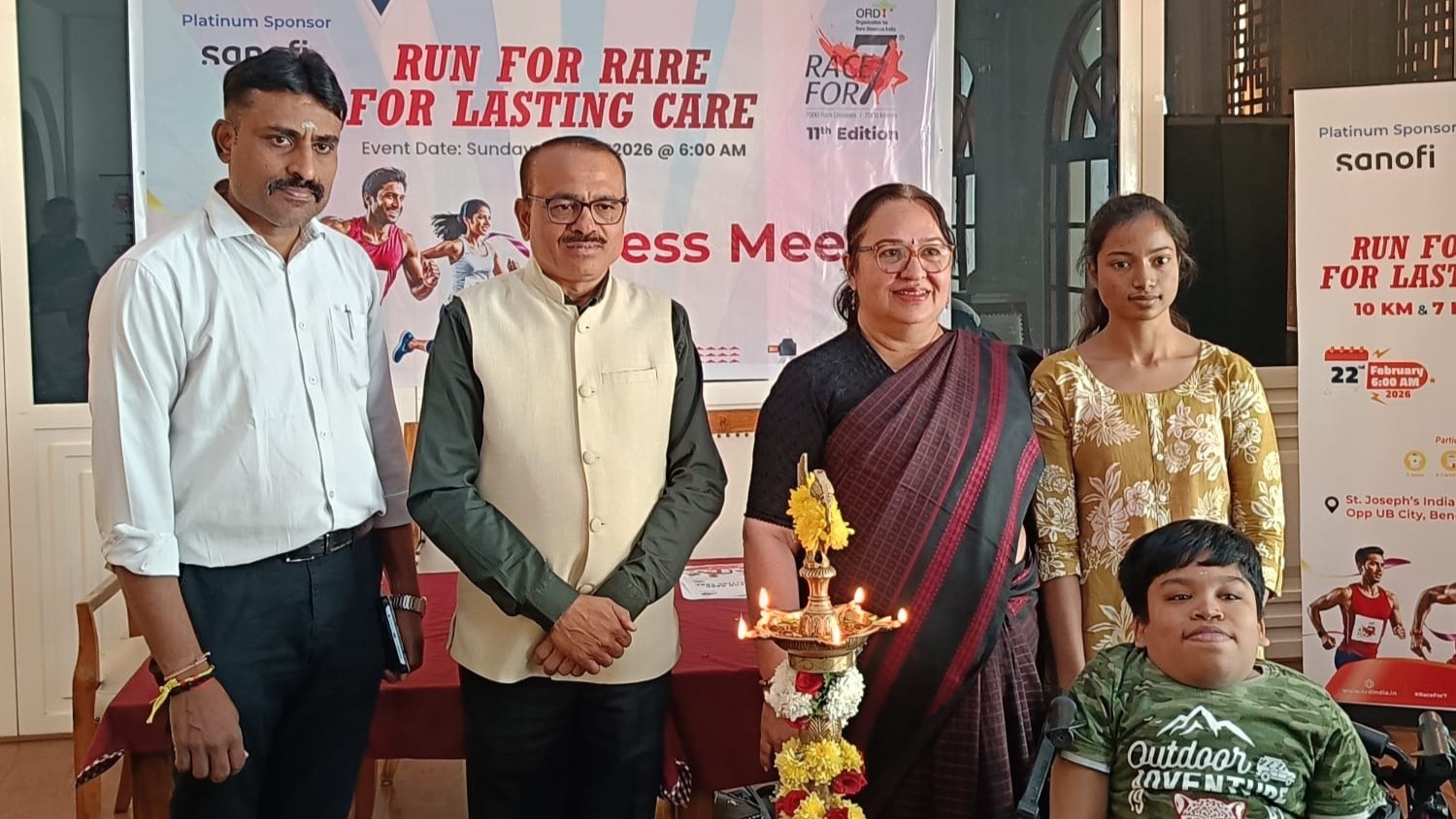
Bengaluru: In a hall filled with quiet courage and unspoken resilience, the Organization for Rare Diseases India (ORDI) hosted a moving press conference ahead of its flagship awareness run, Racefor7, scheduled for February 22.
But this was more than an announcement of an event. It was a call — urgent, heartfelt, and impossible to ignore.
Rare diseases affect over 300 million people worldwide and more than 70 million in India. Yet for many families, the journey begins not with a diagnosis, but with confusion. Years of unanswered questions. Endless hospital visits. Mounting bills. And the silent fear of the unknown.
At the press conference, patients and caregivers stood not as statistics, but as stories. Stories of children misdiagnosed for years; of parents selling assets to afford imported therapies; of young adults navigating life with conditions few doctors have even encountered. Their voices trembled at times, but their message was clear: rare should never mean invisible.
Turning awareness into action
Prasanna Shirol, co-founder and Executive Director of ORDI, spoke with conviction about the need to move beyond symbolic gestures.
“India has made progress in awareness and evolving policies for rare diseases,” he said, “but now the focus must shift to structured, sustained action. Patients need timely diagnosis, comprehensive supportive care, and equitable access to therapies — regardless of geography or affordability. Equitable access must be the standard of care, not a privilege.”
Through initiatives like Racefor7, ORDI has been building a people’s movement — one that unites patients, doctors, researchers, corporates, and citizens in solidarity. Each step taken during the run represents the 7,000+ known rare diseases and the millions of lives intertwined with them.
Science, policy and the promise of India
Dr. Meenakshi Bhat, Head–Director at the Centre for Human Genetics (CHG), Karnataka, reflected on how the landscape has begun to shift since the National Policy for Rare Diseases was announced in 2021.
“For many years, the focus was on early diagnosis and prevention,” she explained. “Today, the emphasis is also on treatment. However, therapies exist for only 5 percent of the 7,000 known rare disorders, and many are prohibitively expensive and imported.”
Her words carried both realism and hope. With support from the Karnataka government, CHG has established the Institute of Advanced Genome Editing and Gene Therapy to develop indigenous, affordable treatment strategies. “Where no treatment exists,” she said, “doctors and scientists must work together to create one.”
It is a reminder that India’s future in rare disease care lies not only in policy, but in innovation rooted at home.
When industry becomes a partner
Bringing in an industry perspective, Dr. Mayur Shah, Head – Rare Disease Franchise at Sanofi India, underscored the human side of corporate responsibility.
“At Sanofi, we believe that rare should never mean forgotten,” he said. “For over three decades, we have stood alongside the rare disease community — not just as a healthcare company, but as partners in their journey toward dignity, access, and hope.”
He described Racefor7 as a powerful symbol of collective action — thousands running for the 7,000 diseases that often remain unseen. “Corporate leadership in rare diseases goes beyond developing treatments,” he added. “It means championing visibility, driving policy dialogue, and building ecosystems of care.”
The gaps that still remain
While India’s rare disease policy framework is evolving, speakers acknowledged that implementation gaps continue to burden families. Limited inclusion of diseases under support schemes, inadequate financial protection, patchy awareness among frontline doctors, and delays in genetic testing still stand in the way of timely care.
The call from Bengaluru was clear: stronger centres of excellence, expanded research and data collection, wider disease inclusion, and robust public–private partnerships are essential. Awareness must translate into access. Policies must translate into protection.
Running for those who cannot
On February 22, when runners gather for Racefor7, they will carry more than bib numbers. They will carry the hopes of families who have waited too long for answers. They will run for children who cannot. For parents who persist. For patients who refuse to be forgotten.
Because in the end, rare diseases may affect individuals — but the responsibility to act belongs to all of us.
And sometimes, change begins with a single step.